Cart
Your shopping cart is empty!
It's never too late to make things right :)



_____
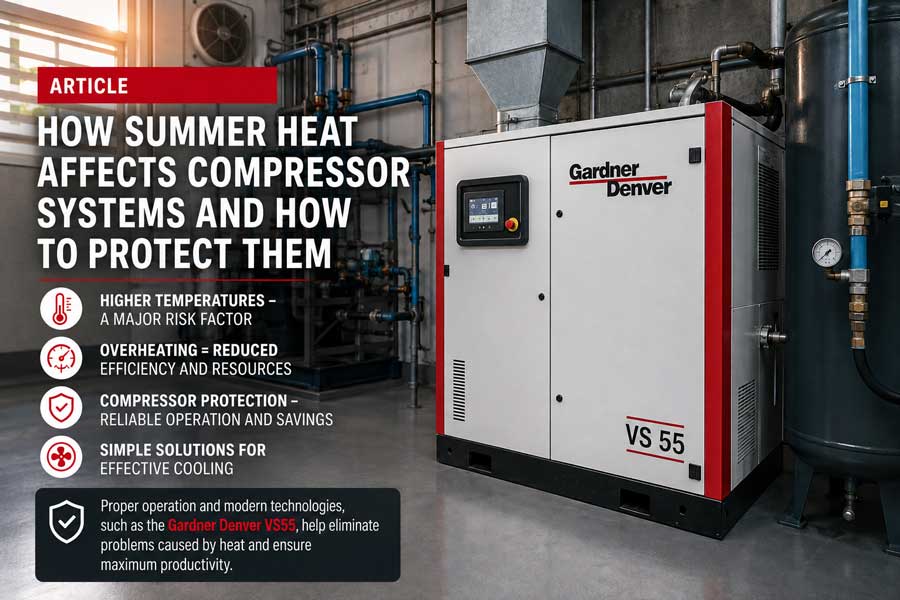
Summer can be particularly difficult for air compressors, due to the sudden fluctuation between cold and warm weather that can occur numerous times during the season.
If the air system is
important to your production, it’s key to understand the importance of protecting
them during the summer.
Heat can have a significant impact in the compressor room,
and to protect it from the heat, you
need to understand heat’s effects.
How the summer will
affect the air systems
• Lower
Flow Rates – Higher temperature means air is less dense, so less air makes its
way through the intake filter.
• Increased
condensate – Warmer air can hold more water vapor. That is why having good
filtration system and a reliable air dryer is important to your compressed air
system.
• More
Draining – More water means your drains have to work harder as well.
• Shorter
lubricant life – If the ambient temperature in your compressor room rises 25 °C over working temperatures, this
will reduce the lubricant life in half.
• More rust
in your piping – If you are still using black iron piping the moisture will
rust the piping system and it will increase the pressure drop and particles
going down stream.
How to Beat The Heat?
• One
important step to protect your air system during this period, is to properly
ventilate the compressor room. The more ventilation, the better chance of
keeping temperatures lower and the compressor working more efficiently
• Is
important to service your dryer before summer. One problem customers face
during this season, is the increased humidity and moisture, which ends up in
the compressed air. A good air dryer will eliminate that water to keep
everything running smoothly.
• Change/service
your in-line filters and drains valves before and during summer. The in-line
filters and drain valves will work twice as hard in the summer, proper
maintenance is key
• Make sure
that all air-cooled, heat exchangers, such as the air/oil cooler on the air
compressor and the condenser on a refrigerated dryer, are kept clean and free
of debris that may partially block the airflow or reduce the heat exchange
efficiency.


